CARE-O-SENE Fellowship Advances Catalyst Research for Sustainable Fuels

CARE-O-SENE Fellowship Advances Catalyst Research for Sustainable Fuels


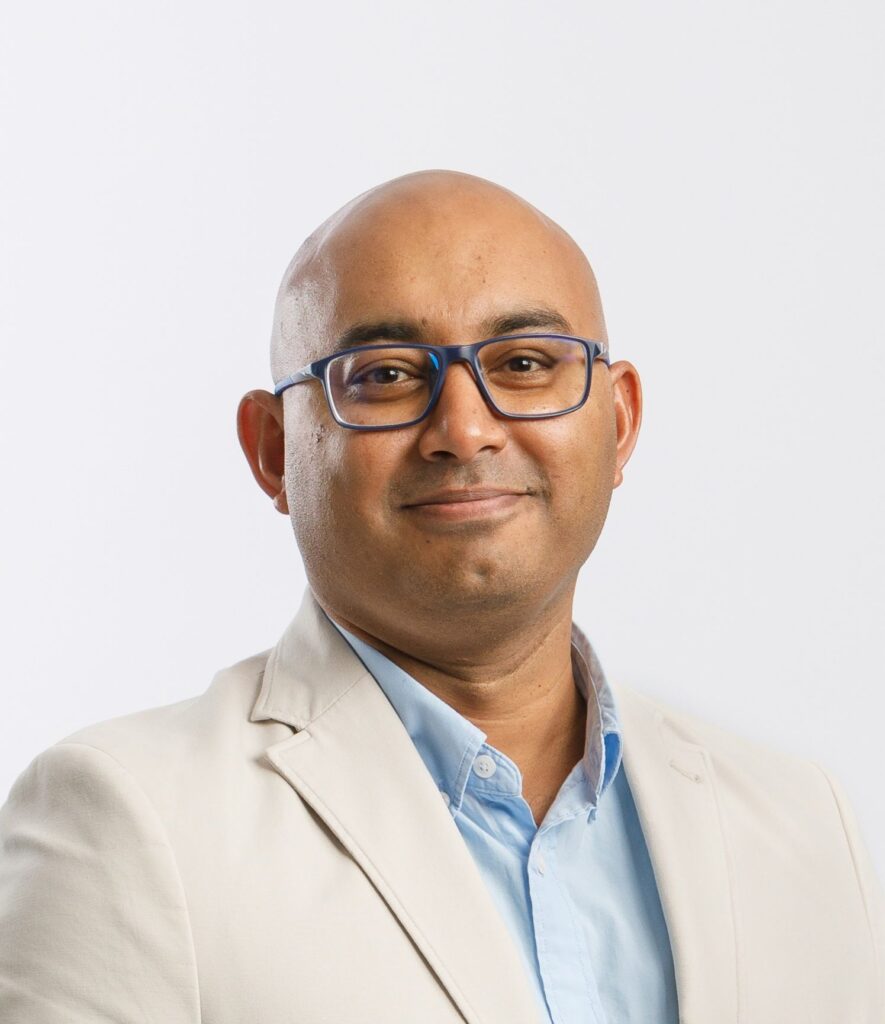
The CARE-O-SENE consortium celebrates the appointment of Dr. Denzil Moodley, Senior Scientist at Sasol Research and Technology, as an Industrial Research Fellow at Helmholtz-Zentrum Berlin (HZB). This fellowship highlights CARE-O-SENE’s commitment to advancing catalyst research for sustainable aviation fuels (SAF) and addressing hard-to-abate emissions, building on the strong collaborations fostered within the consortium.

Dr Moodley, an expert in industrial catalysis with over 20 years of experience, heads Work Package 3 in CARE-O-SENE, focusing on scaling cobalt-based catalysts for SAF production. His new role at HZB will allow him to continue contributing to CARE-O-SENE’s objectives while also driving broader advancements in catalysis research. The fellowship stems from the relationships and expertise developed through the consortium and also aims to accelerate innovation beyond CARE-O-SENE’s immediate scope.

Tobias Sontheimer, co-lead of the CARE-O-SENE project, remarked: “Denzil’s appointment reflects the strength of the partnerships built within CARE-O-SENE. This fellowship not only supports our mission to develop advanced catalysts but also creates a pathway for exploring new frontiers in sustainable technologies.”

Dr. Moodley’s part-time position at HZB will leverage both industrial and academic strengths to drive innovation. He highlighted the opportunity, stating: “This fellowship underscores the importance of connecting academic research with industrial applications. Building on the foundations laid in CARE-O-SENE, I look forward to advancing catalyst technologies that address critical sustainability challenges as well as developing young scientists.”


This initiative exemplifies CARE-O-SENE’s broader mission of fostering knowledge exchange and creating lasting academic-industrial partnerships. By leveraging the insights and relationships cultivated within the consortium, the fellowship reinforces CARE-O-SENE’s leadership in sustainable energy innovation, accelerating progress toward global decarbonisation goals.
CARE-O-SENE at CATSA 2024: Advancing Catalysis for Cleaner Skies

CARE-O-SENE at CATSA 2024: Advancing Catalysis for Cleaner Skies

Im November 2024 hatten Mitglieder des CARE-O-SENE Teams das Privileg, an der Konferenz der Catalysis Society of South Africa (CATSA) 2024 teilzunehmen. Diese fand in der malerischen Drakensberg Region statt. Die Konferenz mit dem Thema „Advancing Innovative Catalysis“ brachte internationale und lokale Führungskräfte aus Wissenschaft, Industrie und staatlichen Laboren zusammen. Gemeinsam diskutierten sie die neuesten Entwicklungen in den Bereichen Katalyse, Energieumwandlung und nachhaltige chemische Prozesse.

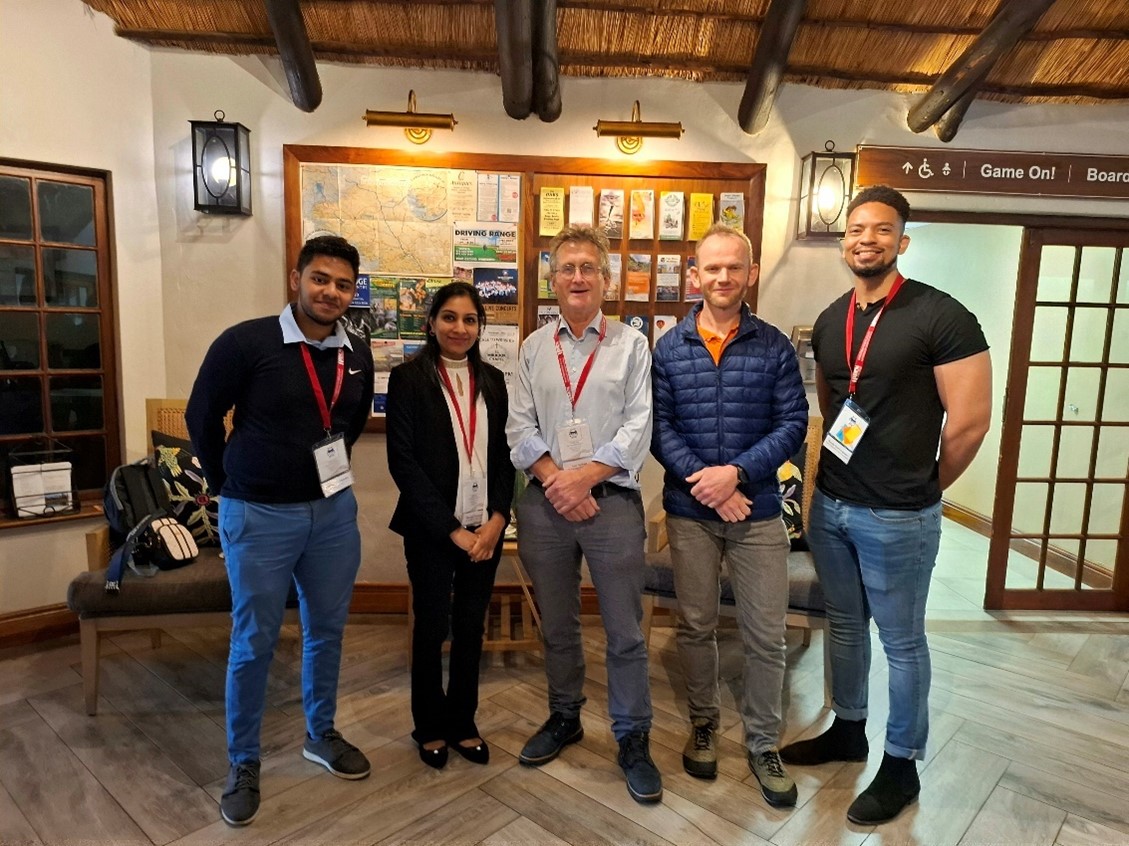
Besonders hervorzuheben war der Plenarvortrag von Prof. Ben Feringa, Nobelpreisträger für Chemie 2016. Seine wegweisende Forschung in der Nanotechnologie und Katalyse setzte wichtige Impulse. Darüber hinaus war CARE-O-SENE war durch mehrere junge Forschende stark vertreten.

CARE-O-SENE Highlights at CATSA 2024:

  • Randy Cunningham (Scientistintraining, Sasol Research and Technology, Fischer-Tropsch Group) präsentierte zunächst die wichtigsten Erfolge des Programms mit dem Titel „CARE-O-SENE: Catalysing Collaboration for Cleaner Skies“. Er betonte dabei die Bedeutung internationaler Partnerschaften für die Weiterentwicklung von Technologien.
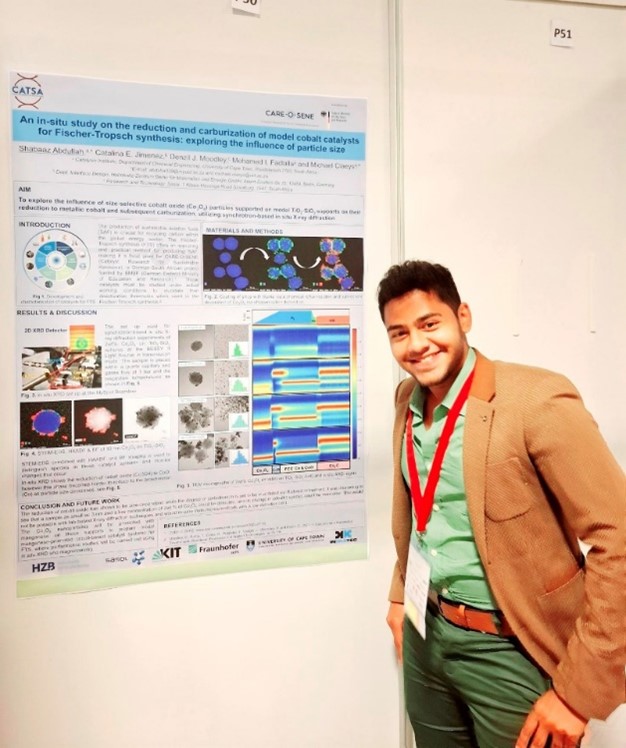
  • Dr. Revana Chanerika and PhD student Shabaaz Abdullah (University of Cape Town) presented their exciting work on model catalysts, aiming to deepen the understanding of technical catalysts in real-world applications.

Additionally, Prof. Eric van Steen, a primary investigator of CARE-O-SENE, chaired one of the conference’s sessions and provided valuable guidance and insight to the discussions. Dr. Timothy Underwood also attended and presented a poster on some of his work outside of CARE-O-SENE, showcasing the analytical capabilities of the University of Cape Town (UCT), which are available to the consortium.

Insgesamt bot die Veranstaltung eine hervorragende Plattform für Networking, Wissensaustausch und die Hervorhebung der wichtigen Beiträge junger Wissenschaftler im CARE-O-SENE Programm. Durch Zusammenarbeit und innovative Forschung macht CARE-O-SENE bedeutende Fortschritte bei der Förderung der Katalyse für eine sauberere und nachhaltigere Zukunft.

Federal Ministry of Research, Technology and Space (BMFTR) supports CARE-O-SENE project until end of 2026

Federal Ministry of Research, Technology and Space (BMFTR) supports CARE-O-SENE project until end of 2026


Hamburg/Berlin, 12 November 2024 – The German-South African CARE-O-SENE consortium, which is developing efficient catalysts for the production of Sustainable Aviation Fuel (SAF) on a Power-to-Liquid (PtL) basis, has received an extension of its funding from the German Federal Ministry of Research, Technology and Space(BMFTR) until the end of 2026.

Dr Dirk Schär, co-project manager and Lead Technical Sales Catalyst at Sasol, explains: 'Thanks to the extension from the BMFTR, we can intensify our research into regeneration of catalysts. This is an important step for the long-term economic viability and sustainability of the PtL process.’

Research focus: long-lasting catalysts, integrated demonstration and new technologies

In the new CARE-O-SENE project phase, the team focuses on further optimising developed Fischer-Tropsch (FT) catalysts and increasing their lifespan. This means that the catalysts will need to be replaced less often, the materials they contain can be used more effectively and the FT process will become more sustainable and economical.

Although catalysts are not consumed by definition, in practice they tend to degrade and thus lose activity over time and become less effective. The CARE-O-SENE project is therefore working intensively to improve the ways these catalysts can be restored, increasing their lifespan and, hence, materials circularity. The project team has already reached the most important milestone: the development of a efficient catalyst with a kerosene yield of over 80 per cent.

The recently developed FT catalyst will also be used in a new integrated system that has been developed by the Fraunhofer Institute for Ceramic Technologies and Systems (IKTS) which will be able to utilise renewable electricity and sustainable feedstocks into FT synthetic crude product that can be upgraded to SAF. This will not only allow for the demonstration of the entire value chain, but also studies into the impacts of varying feedstock and the fluctuation in renewable power availability on the process.

Another focus of the current project phase is further research into thin-film catalysts. ‘This technology will enable a new generation of Fischer-Tropsch reactors and thus further improve the flexibility of sustainable aviation fuel production,’ erklärt Dr. Tobias Sontheimer, Co-Leiter des Projekts und Head of Strategy Department for Energy and Information am Helmholtz-Zentrum Berlin (HZB)und

Achieving the goal through global partnerships

At the CARE-O-SENE 'Innovate to Elevate' event on 15 October, Kerstin Annassi, Head of Department Energy Systems at Projektträger Jülich, handed over the funding extension on behalf of the BMFTR at the HZB premises in Berlin. She emphasised the importance of international cooperation and close collaboration between research and industry: „Nur durch die Bündelung von Expertise und Ressourcen – sowohl über Ländergrenzen hinweg als auch zwischen Forschungsinstituten und Industrie – transformieren wir die Luftfahrtbranche. Insgesamt leisten Fraunhofer IKTS, HZB, INERATEC, KIT, UCT und Sasol gemeinsam einen zentralen Beitrag zur Dekarbonisierung. ’ More information about the event and the full recording can be found here.

The consortium, consisting of the Fraunhofer Institute for Ceramic Technologies and Systems (IKTS), the Helmholtz-Zentrum Berlin (HZB), INERATEC, the Karlsruhe Institute of Technology (KIT), the University of Cape Town (UCT) and Sasol, can thus continue to make an important contribution to the decarbonisation of aviation.


-End-

Press contact:

Torsten Titze, Communications Manager, Sasol
Mobil: +49 173 66 800 90
Torsten.Titze@de.sasol.com

Kerstin Annassi (m.) presents Dr. Dirk Schär (l.) and Dr. Tobias Sontheimer (r.) with the funding extension for CARE-O-SENE on behalf of the BMFTR

A catalyst for change: CARE-O-SENE event on decarbonising aviation attracts global attention

A catalyst for change: CARE-O-SENE event on decarbonising aviation attracts global attention


Die Dekarbonisierung der Luftfahrt gehört zu den drängendsten Herausforderungen unserer Zeit. Wie sieht die Zukunft der Luftfahrt aus? Welche Innovationen gibt es im Bereich sauberer Luftfahrttechnologien? Diese und viele weitere Fragen wurden am 15. Oktober 2024 auf der CARE-O-SENE Veranstaltung „Innovate to Elevate: A Global Collaboration for Decarbonising Aviation“ diskutiert. Mit rund 200 Teilnehmenden, sowohl vor Ort im Helmholtz-Zentrum Berlin (HBZ) als auch online, unterstrich das hybride Format das wachsende globale Engagement zur Emissionsreduktion in der Luftfahrt.

Game-changer sustainable aviation fuel

The event kicked off with virtual opening remarks from Till Mansmann, Innovation Commissioner for Green Hydrogen at the German Federal Ministry of Education and Research.

Anschließend gab Denzil Moodley, Forscher im CARE-O-SENE und Senior Scientist für Fischer-Tropsch-Verfahren bei Sasol, einen Einblick in die Fortschritte von CARE-O-SENE bei der Erforschung von Katalysatoren für die Produktion von nachhaltigem Flugkraftstoff (SAF). Dabei betonte er die Notwendigkeit, geografische und institutionelle Barrieren zu überwinden. Nur so lässt sich nachhaltiger Flugkraftstoff nicht nur rentabel, sondern auch skalierbar und kostengünstig machen. 

Industrie und Politik im Dialog

SAF spielt eine entscheidende Rolle in der Dekarbonisierungsstrategie von DHL, einem der weltweit führenden Logistikdienstleister, wie Volker Ratzmann, EVP of Corporate Public Policy & Regulation Management bei DHL, erläuterte. Er verwies auch auf eine entscheidende Hürde: die regulatorische Unsicherheit bei der Großserienproduktion von SAF. Diese gilt es zu meistern, um die Dekarbonisierung der Luftfahrt zu beschleunigen. 

Dynamic panel discussion: navigating challenges together

Höhepunkt der Veranstaltung war eine Podiumsdiskussion mit Experten aus Industrie und Forschung. Gemeinsam erörtern sie, wie globale Zusammenarbeit dazu beitragen kann, die größten Hürden bei der Einführung von SAF, zu überwinden. Zu den Hauptrednern gehörten Kerstin Annassi vom Forschungszentrum Jülich, Michael Claeys von der Universität Kapstadt, Silke Hoppe von Sasol International Chemicals und Catalina Jimenez, Gruppenleiterin des Energy Materials In-Situ Laboratory (EMIL) am HZB. Einigkeit herschte darüber,  dass internationale Partnerschaften, starke staatliche Unterstützung und kooperative Forschung entscheidend für die Dekarbonisierung des Luftverkehrs sind. Dennoch bleibt klar: Ohne gezielte Finanzierung und regulatorische Unterstützung werden diese Fortschritte jedoch nur schwer zu erreichen sein. 

Haben Sie die Veranstaltung verpasst? Hier finden Sie die vollständige Aufzeichnung und erfahren, wie die Zusammenarbeit der richtigen Partner die Zukunft des Fliegens gestalten kann. Mehr über die Projektpartner hinter dieser Initiative erfahren Sie auf unserer Partnerseite

CARE-O-SENE achieves milestone in the commercialisation of sustainable aviation fuels


CARE-O-SENE achieves milestone in the commercialisation of sustainable aviation fuels

Researchers in the CARE-O-SENE project prove that a yield of over 80% for sustainable kerosene is achievable.

Hamburg/Berlin, 1.10.2024 – Ein Durchbruch für die SAF-Kommerzialisierung: Intensive Tests im CARE-O-SENE-Projekt bestätigen, dass eine Kerosinausbeute von über 80 Prozent mit den neuen Katalysatoren des CARE-O-SENE-Projekts erreicht werden kann. Das verbessert die Wirtschaftlichkeit von Power-to-Liquid-Verfahren (PtL) erheblich – und beschleunigt die SAF-Kommerzialisierung entscheidend.

 This is a significant progress in the development of more efficient catalysts for the Fischer-Tropsch process, a central step in PtL processes for the production of sustainable aviation fuels (SAF). The German-South African CARE-O-SENE consortium, which includes the Fraunhofer Institute (IKTS), the Helmholtz Centre Berlin (HZB), INERATEC, the Karlsruhe Institute of Technology (KIT), University of Cape Town (UCT) and Sasol, is making an important contribution to the goal of decarbonising aviation with this success.

Unter Verwendung des etablierten Fischer-Tropsch-Verfahrens werden grüner Wasserstoff und Kohlendioxid in synthetische Kraftstoffe umgewandelt. Die neuen im CARE-O-SENE Projekt entwickelten Katalysatoren steigern die Effizienz des Gesamtprozesses – bei gleichem Ressourceneinsatz.

Externe Bestätigung durch Topsoe

Die positiven Ergebnisse aus internen Tests des Projektteams im Speziallabor in Südafrika wurden anschließend durch externe Experten des dänischen Unternehmens Topsoe bestätigt.  „Wir haben in unserer Pilotanlage in Dänemark mehrere Produktproben getestet, die Sasol für das CARE-O-SENE-Projekt in seiner semi-kommerziellen Anlage in Südafrika produziert hat. Dabei konnten wir die Ausbeute bei der Kerosinproduktion auf über 80 Prozent steigern“, erklärt Sandra Winter-Madsen, Product Line Director von Topsoe.

‘We are pleased that we have been able to confirm the 80% yield target of the CARE-O-SENE project,’ says Tobias Sontheimer, co-project manager and head of the Strategy Department for Energy and Information at HZB. ’This is another important milestone on the road to the production of SAF suitable for mass production.’

Nächster Schritt: Lebenszyklusanalyse

The next step is now a scientifically sound life cycle analysis (LCA): ‘The product processing data is a crucial building block for the ongoing LCA, which we intend to use, among other things, to better quantify the positive impact of the new catalysts on the viability of PtL projects,’ explains Toine Cents, work package leader in the CARE-O-SENE project and Senior Manager Engineering Research at Sasol. ‘We expect the results of the LCA at the end of 2024.’

Further details on the current state of research in the CARE-O-SENE project and insights into how international collaboration can help to meet the challenge of decarbonising aviation can be found in the webinar: Innovate to Elevate: A CARE-O-SENE Event on International Collaboration to Decarbonise Aviation. Further information can be found at this link.

*Technical term for the effectiveness of multi-stage chemical processes


Press contact:
Torsten Titze, Communications Manager Advanced Materials, Sasol
Mobile telephone: +49 173 66 800 90
Torsten.Titze@de.sasol.com

CARE-O-SENE initiative introduced during Chilean President's visit to Helmholtz-Zentrum Berlin


CARE-O-SENE initiative introduced during Chilean
President's visit to Helmholtz-Zentrum Berlin

Anfang Juni besuchte der chilenische Präsident Gabriel Boric Font das Helmholtz-Zentrum Berlin – ein Besuch mit wissenschaftlichem Gewicht. Mit ihm reiste eine 50-köpfige offizielle Delegation an: Vertreter nationaler Behörden, Parlamentarier, Wirtschaftsvertreter sowie Wissenschaftlerinnen und Wissenschaftler. Darunter befanden sich der chilenische Wissenschaftsminister und vier weitere Minister aus verschiedenen Ressorts.

Im Mittelpunkt der Gespräche stand die Entwicklung innovativer Katalysatormaterialien, die für eine klimaneutrale Industrie entscheidend sind. Das HZB arbeitet gemeinsam mit Sasol an dem internationalen Forschungsprojekt CARE-O-SENE (Catalyst Research for Sustainable Kerosene). Ziel ist die Entwicklung neuer Fischer-Tropsch-Katalysatoren für nachhaltiges Kerosin im industriellen Maßstab. Damit leistet das Projekt einen wichtigen Beitrag zur Dekarbonisierung des Luftverkehrs – einer der größten Herausforderungen der Energiewende. Das Helmholtz-Zentrum Berlin (HZB) ist maßgeblich an dieser Initiative beteiligt.
Der Besuch hat dabei auch eine politische Dimension: Chile und Deutschland haben derzeit gemeinsam den Vorsitz im Climate Club inne, einem Bündnis von 38 Ländern, die gemeinsam gegen den Klimawandel kämpfen. So entsteht mehr als eine Forschungskooperation. Vielmehr wächst hier eine strategische Partnerschaft, die Wissenschaft, Industrie und Politik miteinander verknüpft.

Die CARE-O-SENE Initiative zeigt, wie internationale Kooperationen konkrete Lösungen für die Energiewende vorantreiben können. Wer mehr über die Forschungsarbeit des HZB erfahren möchte, findet auf der Projektseite weitere Informationen zu aktuellen Ergebnissen und Partnerschaften.


The Chilean delegation at HZB at the Synchrotron BESSY II Bridge.


President of Chile, Gabriel Boric Font and his delegation are getting introduced by the COS project Team during their visit to the HZB.


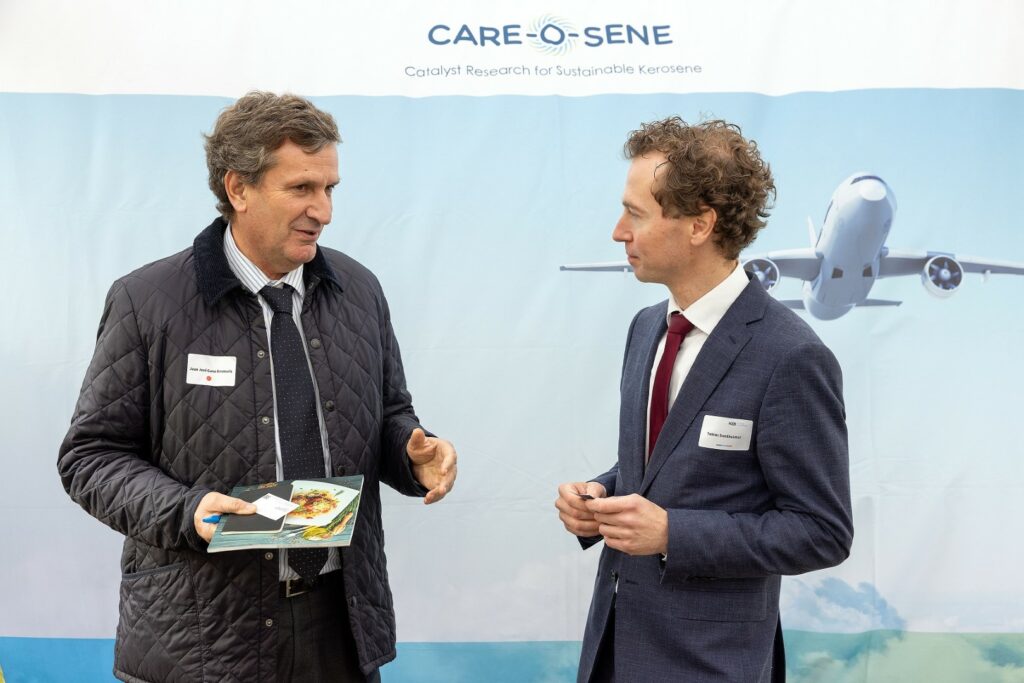
Juan José Gana Errazuriz – Chief Science Officer of HIF Global and part of the delegation, discusses details of the CARE-O-SENE project by Dr. Tobias Sontheimer, co-lead of the COS project.

Young Sasol Scientist's Trip to Helmholtz Zentrum Berlin (HZB) Supported by CARE-O-SENE Mentorship Program


Young Sasol Scientist's Trip to Helmholtz Zentrum Berlin (HZB)
Supported by CARE-O-SENE Mentorship Program
)

Dr. Jerry Lamola, ein Scientist-in-Training (SIT) bei Sasol in Sasolburg, unternahm im Juni eine bemerkenswerte, etwas mehr als einwöchige Reise zum Helmholtz-Zentrum Berlin (HZB). Ermöglicht wurde diese Reise durch seinen Mentor Dr. Tobias Sontheimer, der das CARE-O-SENE Programm mit leitet. Sie wurde im Rahmen des erst im letzten Jahr ins Leben gerufenen CARE-O-SENE Mentorenprogramms organisiert und größtenteils gesponsert.

“This trip proved incredibly fruitful, enhancing both technical prowess and soft skills development for Jerry”, says Dr Denzil Moodley, Senior Scientist at Sasol. “He gained valuable insights into the HZB structure, discussing with experts on key areas like research strategy, funding proposals, staying abreast of current research trends, and evaluating technology readiness levels. Additionally, Jerry participated in technical discussions with investigators involved in the CARE-O-SENE project.”

Von der Synchrotronanlage bis zur Langen Nacht der Wissenschaften

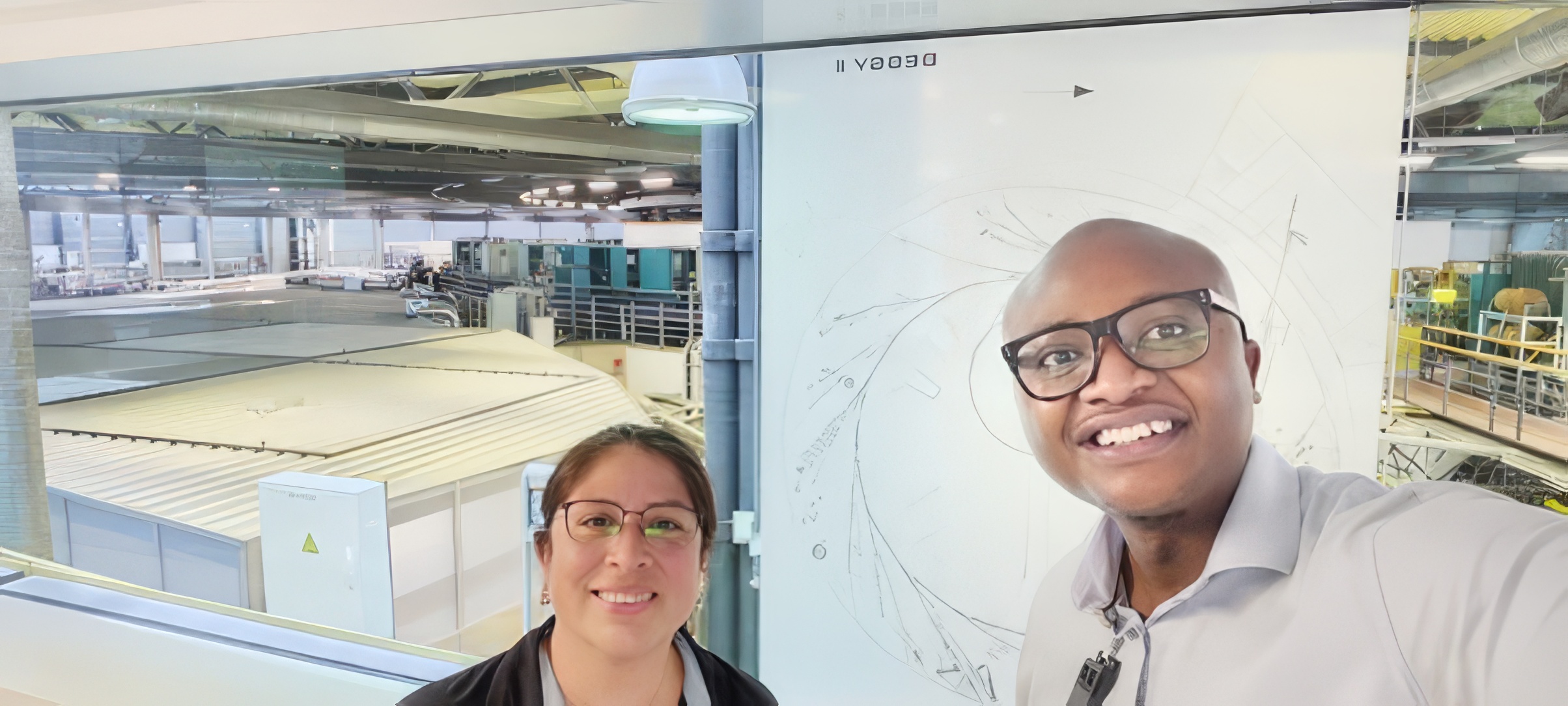
Während seines Aufenthaltes besuchte Jerry eine der größten und gefragtesten Synchrotronanlagen der Welt, BESSY IIUnter Leitung von Dr. Catalina Jimenez nahm er aktiv an Nachtschicht-Experimenten an CARE-O-SENE-Katalysatorsystemen teil.

He contributed to the “Long Night of the Sciences” which is a popular science exhibition for the general Berlin community, where the two South African-German projects GreenQuest and CARE-O-SENE were showcased.

The visit wasn’t just focused on CARE-O-SENE but gave Jerry a wider exposure to the HZB facilities. A visit to the HZB Wannsee campus allowed him a tour of multiple labs and provided him with a high-level overview of their techniques and other types of research which included water-splitting, electrocatalysis, photocatalysis and fundamental understanding of electrons.

Reflecting on his experience, Jerry said:

"The trip was exceptionally well-rounded and full of many incredible experiences. I’m grateful to Tobias and CARE-O-SENE for the opportunity, as well as all the HZB colleagues who welcomed me so warmly. The biggest highlight is seeing how the power of fundamental science is used to address societal and industrial challenges, as evidenced by the impact of the CARE-O-SENE and GreenQuest projects."

Neben seinen wissenschaftlichen Aktivitäten genoss Jerry in seiner Freizeit den deutschen Sommer, erkundete das kulturelle Angebot Berlins und erlebte die Spannung und Atmosphäre der Fußball-Europameisterschaft 2024, die in Deutschland ausgetragen wurde. Insgesamt belegt sein Besuch: Das CARE-O-SENE Mentorenprogramm fördert Talente und treibt internationalen Wissenschaftsaustausch aktiv voran.

From left: Dr Avela Kunene and Dr Jerry Lamola, a fellow South African CARE-O-SENE team member working at HZB, during the “Long Night of the Sciences” science exhibition

From left: Dr. Catalina Jimenez (WP 1 leader CARE-O-SENE) with Dr. Jerry Lamola enjoying his first ever visit to a synchrotron facility (Bessy II)

From left: Dr. Jerry Lamola with Dr. Athanasios Skaltsogiannis, with the in-situ Fischer Tropsch reactor developed at HZB for the CARE-O-SENE project, in the background.

CARE-O-SENE takes stage at Zeit für Klima

The pressing question of whether sustainable aviation is achievable took center stage at the recentZeit für Klimaevent under the motto "Aviation and Climate Neutrality: Can We Fly Sustainably?” in Frankfurt.

The event brought together experts from various fields to discuss innovative solutions for a greener future. Among the notable contributors was Dr. Tobias Sontheimer, co-lead of the #CAREOSENE consortium, who shared his insights on the path towards climate-neutral aviation.

During the panel discussion titled “Innovative Technologies and Quick Wins on the Way to Climate-Neutral Aviation,” Dr Tobias Sontheimer delved into the role of innovative catalyst technologies in the production of Sustainable Aviation Fuel (SAF). He explained how these catalysts are crucial in minimizing resource consumption during fuel production. “The existing fleet of aircraft will need to be supplied with fuel for several more decades,” Sontheimer noted, emphasizing the need for efficient and sustainable fuel solutions. “At the same time, the blending rates of SAF will change significantly over the next few years, necessitating advancements in fuel technology.”

SAF-Mischungsmandate: Warum die Zeit drängt

The panelists highlighted the key role of SAF for decarbonizing the aviation sector and stressed the importance of international projects such as CARE-O-SENE to accelerate innovation cycles and the speed up commercialization. It was common sense between all panelists to achieve or even exceed these SAF blending mandates. “To achieve this”, stated Tobias Sontheimer, “we do not have the time to allow ourselves development cycles of 10 to 15 years. We have to scale the production of SAF short-term”, which the CARE-O-SENE project is aiming for.

Die Veranstaltung war zudem auch eine gute Gelegenheit zum Networking.  Dr. Dirk Schär, Co-Leiter, hob die Mission von CARE-O-SENE hervor, die darauf abzielt, das nachhaltige Fliegen kostengünstiger zu machen. Die Forschungen und Innovationen des Konsortiums im Bereich der Katalysatortechnologie werden eine zentrale Rolle bei der Energiewende im Luftfahrtsektor spielen. Durch die Verbesserung der Effizienz und die Verringerung der Umweltauswirkungen der SAF-Produktion schafft CARE-O-SENE die Voraussetzungen für eine Zukunft, in der das Fliegen sowohl umweltfreundlich als auch wirtschaftlich rentabel sein kann.

The discussion at “Zeit für Klima” underscored the urgency and feasibility of transitioning to sustainable aviation practices.

Unlocking the Future of Sustainable Aviation Fuel: Insights from Dr Dirk Schaer on FT Technology, New Catalysts, and Geothermal Energy

Nach seinem jüngsten Vortrag auf der 5. isländischen Geothermiekonferenz (IGC2024) nahm sich Dr. Dirk Schaer, Technical Manager Marketing und Sales Catalyst bei Sasol Germany und Co-Lead des CARE-O-SENE-Projekts, die Zeit, drei Fragen zu beantworten. Im Fokus: Warum die Kombination aus Fischer-Tropsch SAF-Produktion und geothermischer Energie besonders effizient ist – und welche Rolle die neuen CARE-O-SENE-Katalysatoren dabei spielen.

What are the primary advantages that FT technology delivers in SAF production?

Die Fischer-Tropsch-Technologie überzeugt gleich in mehrfacher Hinsicht. Erstens ist sie kommerziell bewährt und weit verbreitet. Zweitens ist sie rohstoffunabhängig und damit bemerkenswert vielseitig. Drittens liefert sie die höchsten Kerosinerträge – das maximiert die Nutzung erneuerbarer Ressourcen und minimiert Treibhausgasemissionen. Zudem ist FT-produziertes Kerosin bereits ASTM-zugelassen. Sasol verfügt darüber hinaus über langjährige Erfahrung in der Zusammenarbeit mit Luftfahrtbehörden.

Why is it important to develop new catalysts for SAF production?

Zwei Haupthindernisse bremsen die SAF-Produktion im großen Maßstab. Zum einen erfordert die Herstellung erhebliche Mengen Energie. Effizientere FT-Katalysatoren senken diesen Bedarf – und machen SAF dadurch kostengünstiger und nachhaltiger. Zum anderen gilt es, die Abhängigkeit von Edelmetallen und Kobalt zu reduzieren. Moderne Katalysatoren helfen, Ressourcenknappheit und Kostenschwankungen gezielt zu begegnen.

Warum ist die Kombination von FT und Geothermie so vorteilhaft?

Geothermische Energie – ebenso wie Wasserkraft – liefert eine stabile Energiequelle. Das umgeht die dynamischen Abläufe, die beim FT-Verfahren eine Zwischenspeicherung erfordern. Als Ergebnis sinken die Investitionskosten deutlich. Gleichzeitig reduziert sich die Betriebsbelastung – was die Lebensdauer der Katalysatoren verlängert und die Fischer-Tropsch SAF-Produktion insgesamt nachhaltiger und rentabler macht.

CARE-O-SENE at the 13th Natural Gas Conversion Symposium in China

CARE-O-SENE at the 13th Natural Gas Conversion Symposium in China

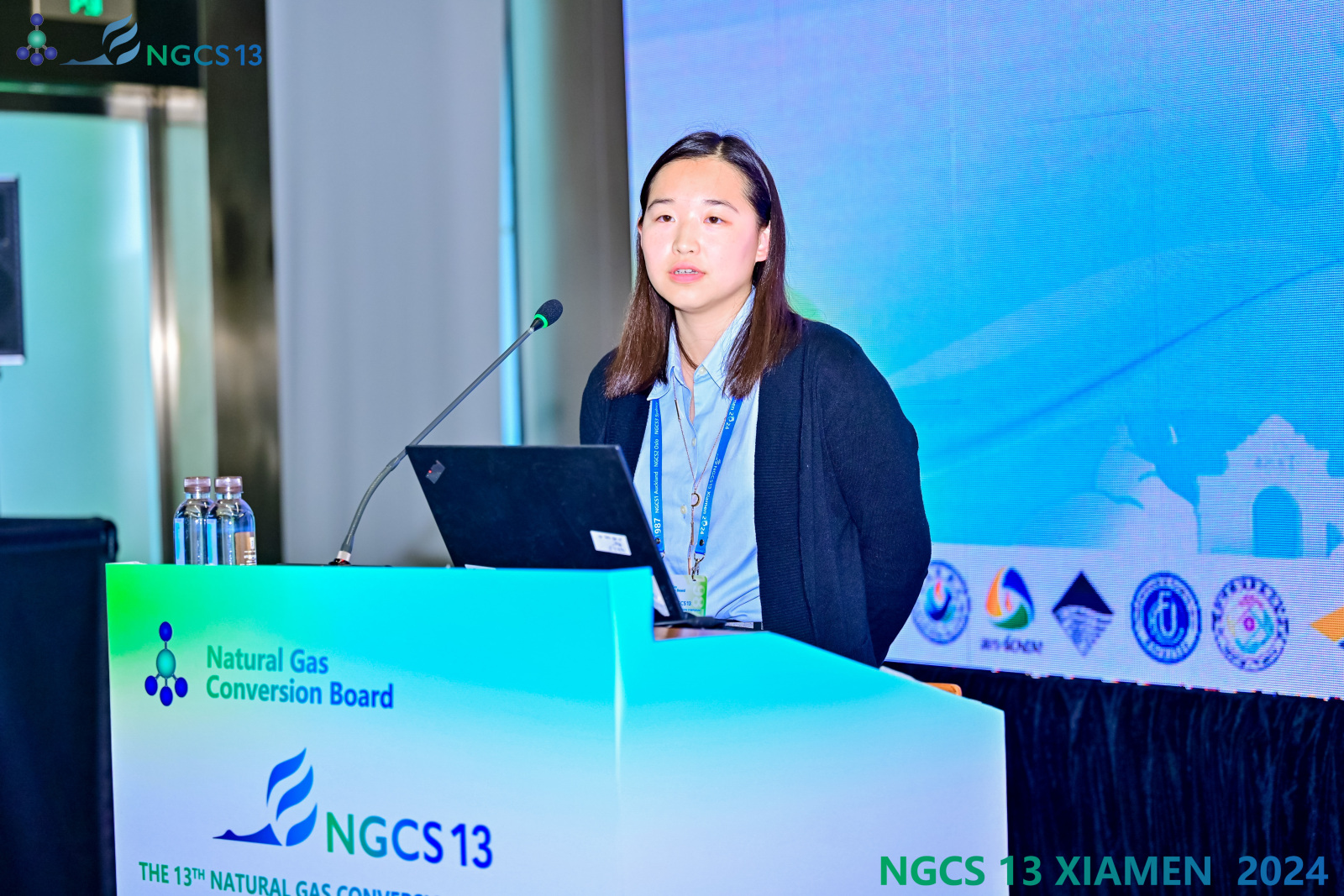
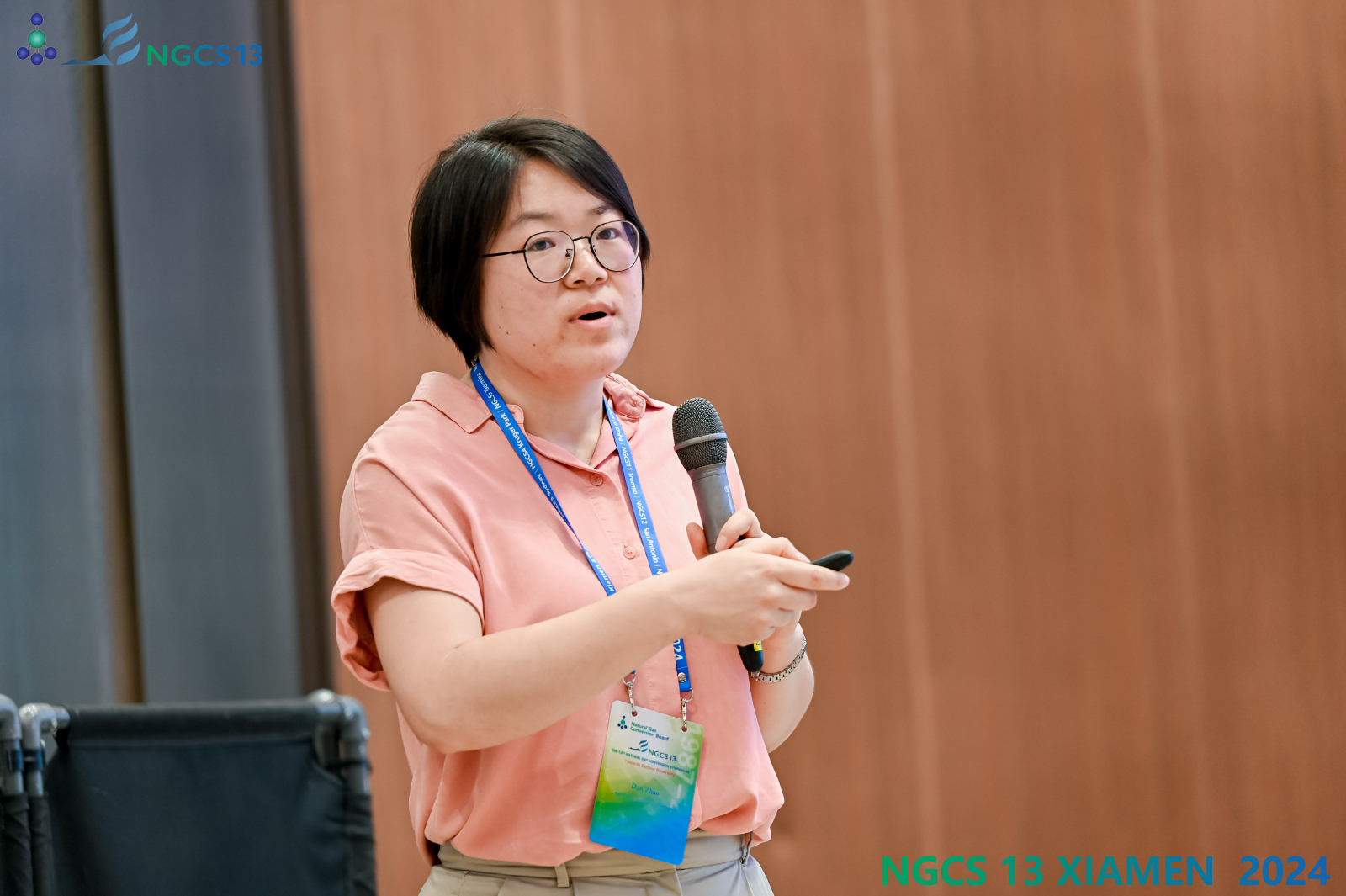
CARE-O-SENE in China: At the end of April, CARE-O-SENE members attended the 13th Natural Gas Conversion Symposium (NGCS13) in Xiamen, China along with 800 other scientists. Under the theme "Towards Carbon Neutrality", the symposium shared insights on science, materials and technology related to natural gas, carbon dioxide and hydrogen, in line with advanced catalyst preparation, characterisation, modelling, data analysis approaches and industrial applications in over 180 talks.

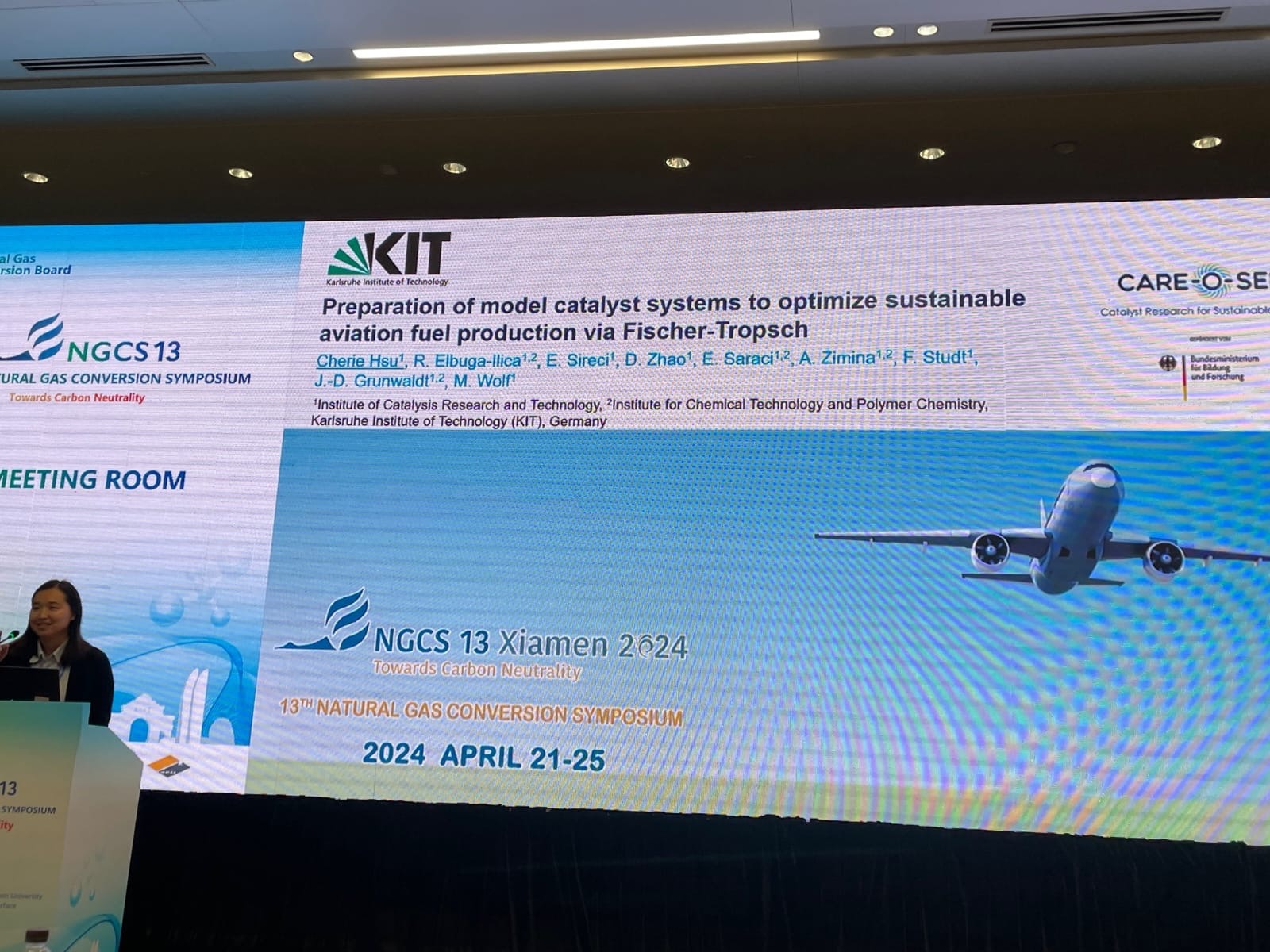
Cherie Hsu presented "Preparation of model catalyst systems to optimise sustainable aviation fuel production via Fischer-Tropsch" and won the "Best Oral Presentation Award" among 10 presenters – congratulations!

Dr Dan Zhao presented "Tracking the metal-support interaction of size-selected Co3O4 nanoparticles as model catalysts for Fischer-Tropsch synthesis by in-situ XAS".

CARE-O-SENE's Denzil Moodley is part of the Board of the Natural Gas Conversion Symposium and Michael Claeys has been re-elected as Secretary of the Natural Gas Conversion Board.